




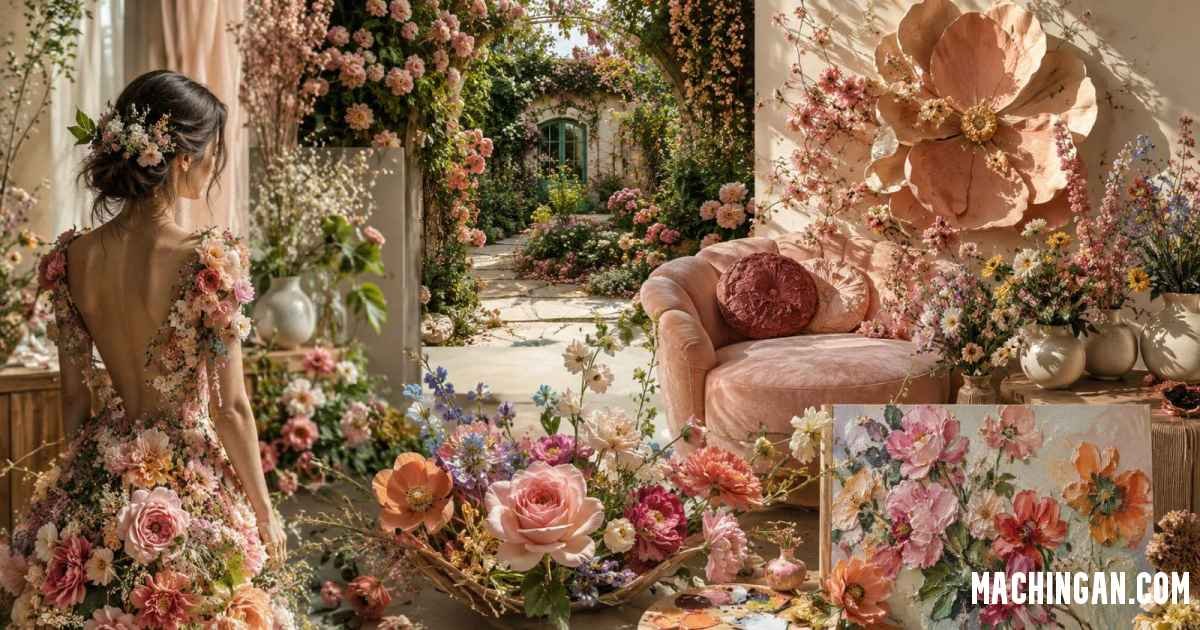
What is Fleurism? Origin and Meaning
The word Fleurism comes from the French word “Fleur,” meaning “flower,” combined with the suffix “-ism,” which represents a movement or philosophy. Together, Fleurism literally means “the philosophy or movement of flowers.”
Although the term has gained widespread popularity in 2026, its modern identity largely comes from the celebrated Fleurism art exhibition organized by Wasuka Art in partnership with Dao by Dorsett, Singapore.
According to the exhibition, Fleurism offers a contemporary perspective on flora and its many facets through a variety of visual concepts, styles, and techniques that have been thoughtfully interpreted by a group of local and international, aspiring and established artists.
The exhibition features eight artists of different artistic styles, whose collective garden explores the contemporary language of flowers while traversing the growth of people through the transformation of flora.
This gives Fleurism two important meanings:
- Visual Fleurism – Flowers become powerful artistic subjects instead of decorative backgrounds.
- Philosophical Fleurism – Flowers symbolize human emotions, growth, resilience, healing, and transformation.
Instead of simply admiring flowers for their beauty, Fleurism encourages people to understand what flowers communicate.
Fleurism and the Language of Flowers (Floriography)
Understanding Floriography, often called the language of flowers, is essential to understanding Fleurism.
Floriography is a traditional form of symbolic communication through flowers. Across Europe, Asia, and Africa, people have used flowers for thousands of years to express emotions that words sometimes cannot.
In many cultures, carefully arranged bouquets communicated messages of love, hope, remembrance, forgiveness, or friendship without speaking a single word.
Fleurism is considered the contemporary evolution of Floriography.
Popular flower meanings within modern Fleurism include:
| Flower | Meaning in Fleurism |
|---|---|
| Red Rose | Deep love and passion |
| White Lily | Purity, rebirth, and new beginnings |
| White Orchid | Elegance, strength, and sincere affection |
| Sunflower | Loyalty, happiness, resilience, and hope |
| Lavender | Peace, healing, calmness, and devotion |
| Cherry Blossom | Beauty, impermanence, and living in the present |
| Red Peony | Prosperity, romance, and good fortune |
| Dried Eucalyptus | Protection, memory, and lasting connection |
Today, many people create intentional Fleurism bouquets, floral tattoos, botanical artwork, and home decorations that carry hidden emotional messages instead of choosing flowers only for appearance.
Fleurism as a Contemporary Art Movement
In 2026, Fleurism art has become one of the fastest-growing contemporary artistic movements.
Unlike traditional floral paintings, Fleurism places flowers at the center of human storytelling.
The famous Singapore exhibition describes Fleurism as an exploration of the contemporary language of flowers, where the growth and transformation of plants mirror the emotional journeys of people.
One featured artist explains this beautifully through signature watercolor artistry, depicting the symbiotic relationship between humanity and nature through studies of local plants, emphasizing that each is essential to the other’s survival.
Some defining characteristics of Fleurism art include:
- Flowers become characters, representing joy, grief, resilience, healing, and personal growth.
- Artists combine watercolor, sculpture, photography, digital illustration, installations, and pressed flowers instead of limiting themselves to one artistic style.
- Every artwork reflects transformation, from blooming flowers to fading petals, symbolizing the different stages of life.
- Local plants receive special attention, celebrating regional biodiversity while connecting cultures through shared appreciation of nature.
Because of its emotional depth and visual beauty, Fleurism artwork has become extremely popular across Pinterest, Instagram, Etsy, galleries, and modern home interiors.
Fleurism Decor: The Biggest Interior Design Trend of 2026
Interior designers are calling Fleurism the new Hygge for 2026 because it combines beauty, mindfulness, sustainability, and comfort.
Rather than filling every room with random flowers, Fleurism decor focuses on intentional design choices.
Popular Fleurism decorating ideas include:
The One-Stem Rule: Instead of overcrowded bouquets, many designers recommend displaying one meaningful flower in a handcrafted ceramic vase. A single orchid, lily, or sunflower often creates a stronger emotional impact than dozens of flowers.
Pressed Flower Art: Real flowers are carefully preserved and framed to create affordable botanical artwork with personal meaning.
Floral Language Walls: Homeowners decorate walls with botanical prints representing calmness, prosperity, healing, protection, or happiness through carefully selected plants.
Natural Floral Fragrance: Rose, jasmine, lavender, and gardenia essential oils create emotional comfort while supporting aromatherapy.
Sustainable Fleurism: Instead of relying on imported flowers, many people now grow local seasonal flowers, strengthening the relationship between humans and nature while reducing environmental impact.
Botanical Color Palettes: Soft greens, warm beige, dusty pink, terracotta, sage, cream, and earthy browns create peaceful spaces inspired by natural landscapes.
The result is a home that feels calm, meaningful, and deeply connected to nature.
Fleurism Philosophy: More Than Beautiful Flowers
Beyond art and decoration, Fleurism has become a philosophy for mindful living.
At its heart, Fleurism teaches that nature reflects our own personal journey.
Its core principles include:
Everything blooms in its own season. Just as flowers cannot be rushed, personal growth also happens naturally. Every individual develops at their own pace.
Growth requires both sunshine and storms. Flowers need rain as much as sunlight, reminding us that life’s challenges often create our greatest personal development.
Beauty exists in imperfection. Inspired partly by the Japanese philosophy of Wabi-Sabi, Fleurism recognizes that faded petals, bent stems, and aging leaves possess their own unique beauty.
Connection creates survival. The Fleurism exhibition emphasizes the symbiotic relationship between humanity and nature, reminding us that one cannot truly flourish without the other.
In 2026, many people practice Fleurism journaling, floral meditation, and mindful gardening to reduce stress, improve emotional well-being, and reconnect with nature in an increasingly digital world.
How to Practice Fleurism in Your Daily Life
Starting your own Fleurism journey is surprisingly simple.
Begin by learning the symbolic meaning of flowers connected to your birth month, personality, or personal goals. Many people choose one flower as their personal symbol for growth.
Create a small Fleurism corner in your home with a favorite plant, a piece of floral artwork, and a natural scented candle or essential oil diffuser. Spending just a few quiet minutes there each day encourages mindfulness.
When giving flowers to friends or family, build bouquets with intention. Instead of selecting random flowers, choose combinations that communicate gratitude, encouragement, healing, or love.
Support contemporary Fleurism artists by visiting exhibitions such as the Wasuka Art Fleurism exhibition, following botanical artists on Instagram, or exploring floral installations in local galleries.
Finally, practice slow living by caring for your plants without distractions. Observe their growth, document their changes with photographs, and reflect on your own personal development alongside theirs.
Why Fleurism Will Continue to Grow Beyond 2026
Fleurism is far more than a passing design trend. It represents a meaningful return to nature during an era increasingly dominated by technology, artificial intelligence, and constant digital stimulation.
From its internationally recognized art exhibition featuring eight artists exploring the contemporary language of flowers, Fleurism has expanded into interior design, sustainable living, emotional wellness, floral symbolism, and modern philosophy.
By combining art, emotion, nature, mindfulness, and personal transformation, Fleurism encourages people to see flowers not simply as decoration but as a universal language connecting humanity with the natural world.
Whether you are passionate about contemporary art, meaningful home decor, floral symbolism, or mindful living, Fleurism offers an inspiring perspective that continues to flourish in 2026.
Embrace Fleurism, let nature become part of your daily life, and allow your own story to bloom—just like a flower.