





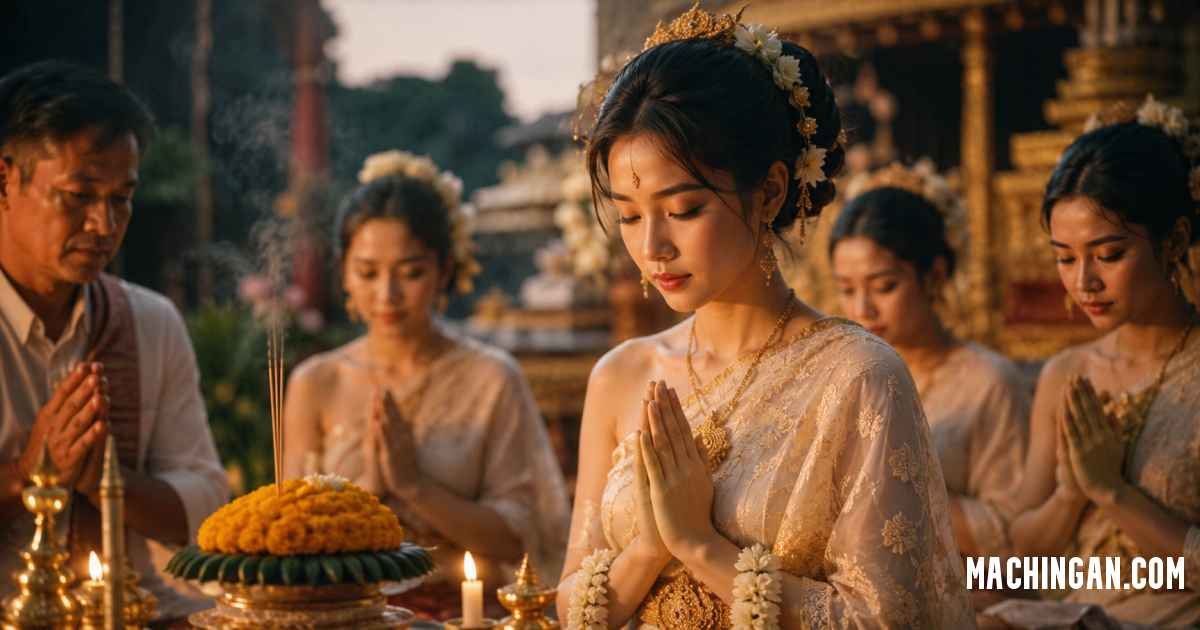
เจ้าสาวแก้ดวง literally translates to “Bride to Fix Bad Luck” or “Ritual Bride.” In traditional Thai astrology, it is considered a แก้เคล็ด (Kae Kled) ritual—a symbolic act intended to reduce or redirect unfavorable destiny.
According to traditional beliefs, some men are born with ดวงกินเมีย (Duang Gin Mia) or ดวงต้องมีเมียหลายคน, meaning their horoscope indicates that their first marriage may end in divorce, serious hardship, illness, or even tragedy affecting their spouse.
To symbolically fulfill this unfavorable prediction before marrying the person they truly love, the man first undergoes a symbolic marriage with another woman, known as the เจ้าสาวแก้ดวง. After a brief ritual or legal marriage (depending on tradition), they separate or divorce. Believers say this fulfills the negative fate, allowing the man’s actual marriage to begin with a “clean” destiny.
Today, many view the practice as a cultural tradition rather than an absolute necessity, but it remains one of Thailand’s most fascinating relationship beliefs.
Why Does This Belief Exist? Astrology, Karma, and Ancient Traditions
The concept of เจ้าสาวแก้ดวง comes from several deeply rooted aspects of Thai culture.
The first is Thai astrology (โหราศาสตร์ไทย). Traditional fortune tellers examine birth charts and planetary positions. If marriage-related stars—such as ดาวเสาร์ or ดาวมฤตยู—appear in unfavorable positions, they may predict that the individual is destined to experience a failed first marriage. The ritual is suggested as a symbolic remedy.
Another reason is rooted in fear and love. Many families believe the ritual protects the woman the groom truly intends to marry. Instead of risking harm to the future wife, the symbolic marriage is believed to “consume” the negative karma beforehand.
The belief also connects to the traditional interpretation of karma. In older Thai spiritual traditions, if destiny says someone must experience divorce, believers attempt to fulfill that prediction through a controlled symbolic divorce, avoiding what they fear would otherwise become a painful real-life separation.
Historically, the ritual was especially common among Chinese-Thai families, households that strongly followed ฮวงจุ้ย (Feng Shui), and families that regularly consulted astrologers before important life events.
Types of เจ้าสาวแก้ดวง Rituals in Modern Thailand (2026)
The practice has evolved significantly, and in 2026 there are three primary forms.
The most common is the Symbolic Ceremony. No legal marriage is registered. Instead, the participants make merit at a temple, offer food to monks, tie sacred white threads (สายสิญจน์), participate in blessing ceremonies, and symbolically separate shortly afterward. This entire process often takes only a few hours.
The traditional legal marriage still exists but has become increasingly rare. In this version, the couple legally registers their marriage at the district office (อำเภอ), remains married for a short period—sometimes just one day—and then officially divorces. While historically accepted, this approach now raises legal concerns involving property rights, debts, inheritance, and future marriage records.
A third variation is the Spirit Bride Ritual (เจ้าสาวผี หรือ เจ้าสาวทิพย์). Rather than involving another person, some fortune tellers recommend symbolically marrying a banana tree, doll, or spiritual representation. Many modern believers prefer this version because it avoids involving a real woman while still satisfying traditional spiritual beliefs.
How the เจ้าสาวแก้ดวง Ceremony Works Step by Step
Although rituals vary depending on local customs and astrologers, a typical 2026 symbolic ceremony follows several steps.
First, the groom chooses a willing participant. The ritual bride is often a trusted friend, distant relative, or someone familiar with the tradition. Some professional ritual participants also exist. Traditional beliefs sometimes suggest selecting someone considered to have ดวงแข็ง, or a particularly strong destiny.
Next, an astrologer determines the most auspicious ฤกษ์ (lucky date and time) for both the symbolic marriage and symbolic separation.
The ceremony itself generally includes making merit, offering food to monks, receiving blessings, tying sacred threads, and exchanging symbolic vows intended solely for แก้ดวง rather than creating a genuine marital relationship.
Immediately afterward comes the symbolic separation. The sacred thread may be cut, ritual items returned, water poured as a sign of releasing the past, or other symbolic acts performed to end the connection.
Finally, both individuals often perform additional merit-making activities such as releasing birds or fish, donating to temples, or participating in charitable acts to symbolize cleansing remaining negative karma.
Modern Debate: Is เจ้าสาวแก้ดวง Fair and Still Necessary?
In 2026, opinions are sharply divided.
Supporters believe the ritual represents an act of love and protection. Rather than risking the wellbeing of a future spouse, they view the symbolic marriage as a compassionate way to redirect negative destiny. The ritual bride is often regarded as performing a good deed and may receive financial compensation, gifts, or gold as appreciation.
However, younger generations increasingly question its ethics.
Critics argue that the practice may objectify women, treating them as symbolic tools for absorbing someone else’s misfortune. Others ask whether participating could negatively affect the ritual bride’s own future relationships, although there is no evidence supporting such claims.
Legal experts also caution against the traditional legal marriage version, warning that it can create complications involving marital property, debts, taxes, inheritance, and official records.
Many respected Buddhist monks and relationship counselors now emphasize that communication, mutual respect, emotional maturity, and commitment have far greater influence on long-term marriage success than ritual practices.
Modern Alternatives to เจ้าสาวแก้ดวง in 2026
Many Thai astrologers now recommend alternatives that preserve cultural traditions without requiring another person to participate.
Popular alternatives include:
- Making significant merit together, such as donating to hospitals, building temple facilities, or supporting charitable causes.
- The “marry-divorce-remarry” symbolic ritual, where the real couple themselves performs a symbolic separation before renewing their vows.
- Living together before marriage, which some astrologers consider fulfilling the prediction of one separation.
- Holding multiple wedding ceremonies, such as traditional and modern celebrations, symbolically representing more than one marriage.
- Premarital counseling, financial planning, and relationship education, which psychologists consistently identify as effective ways to reduce divorce risk.
Many modern spiritual teachers believe that creating positive karma through compassionate actions offers a more meaningful path than relying solely on symbolic rituals.
Final Verdict: Should You Believe in เจ้าสาวแก้ดวง?
เจ้าสาวแก้ดวง remains one of Thailand’s most fascinating cultural traditions, reflecting centuries of beliefs about astrology, karma, destiny, and marriage. It demonstrates how deeply people value protecting those they love.
While some families continue practicing the ritual, many modern Thais now interpret it as a symbolic reminder rather than a strict requirement. Whether viewed through the lens of spirituality, psychology, or culture, the message remains similar: healthy relationships require trust, communication, responsibility, and mutual respect.
If a fortune teller advises a เจ้าสาวแก้ดวง ritual, there is no need to panic. Consider seeking guidance from experienced spiritual leaders, discussing the matter openly with your partner, and understanding both the cultural significance and practical implications before making any decision.
Ultimately, your daily actions, commitment, kindness, and willingness to grow together shape the future of your marriage far more than any ritual alone. Respecting Thai traditions while embracing modern relationship wisdom allows couples in 2026 to honor the past while building stronger futures.